Form / Meaning
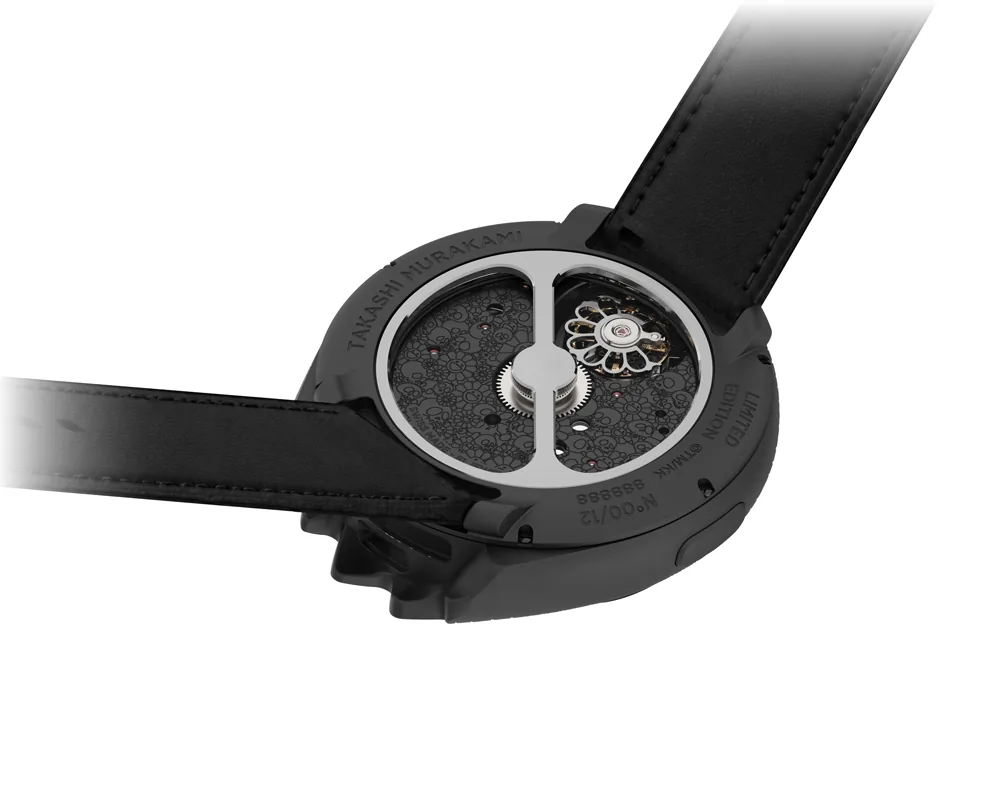
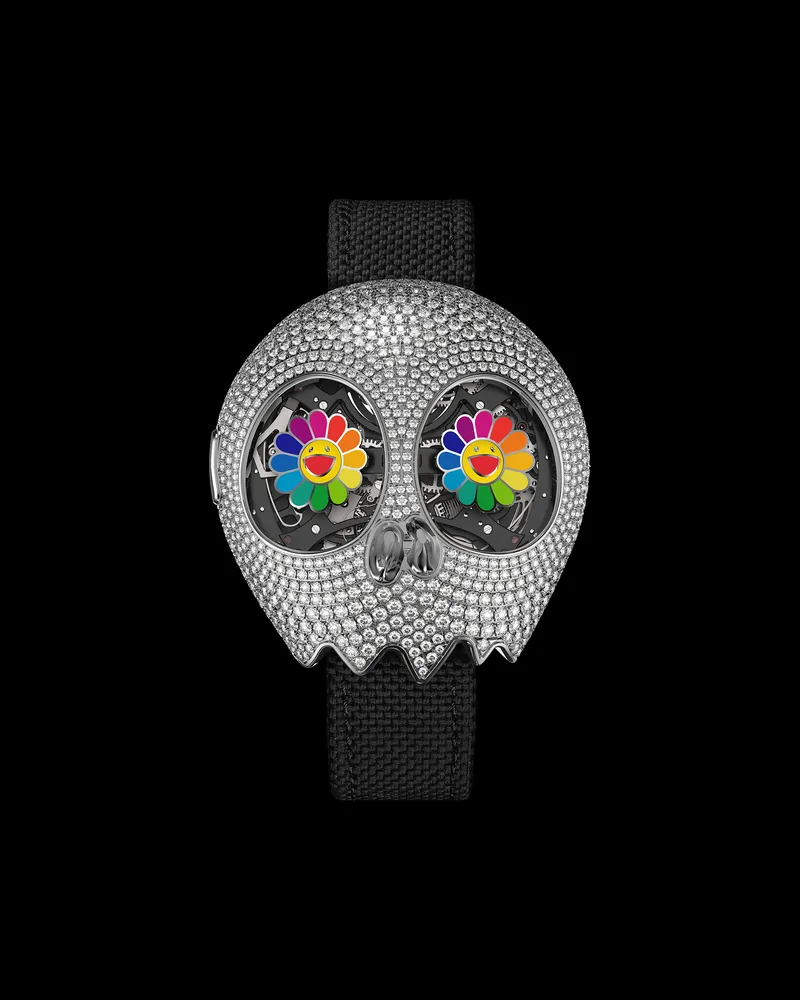
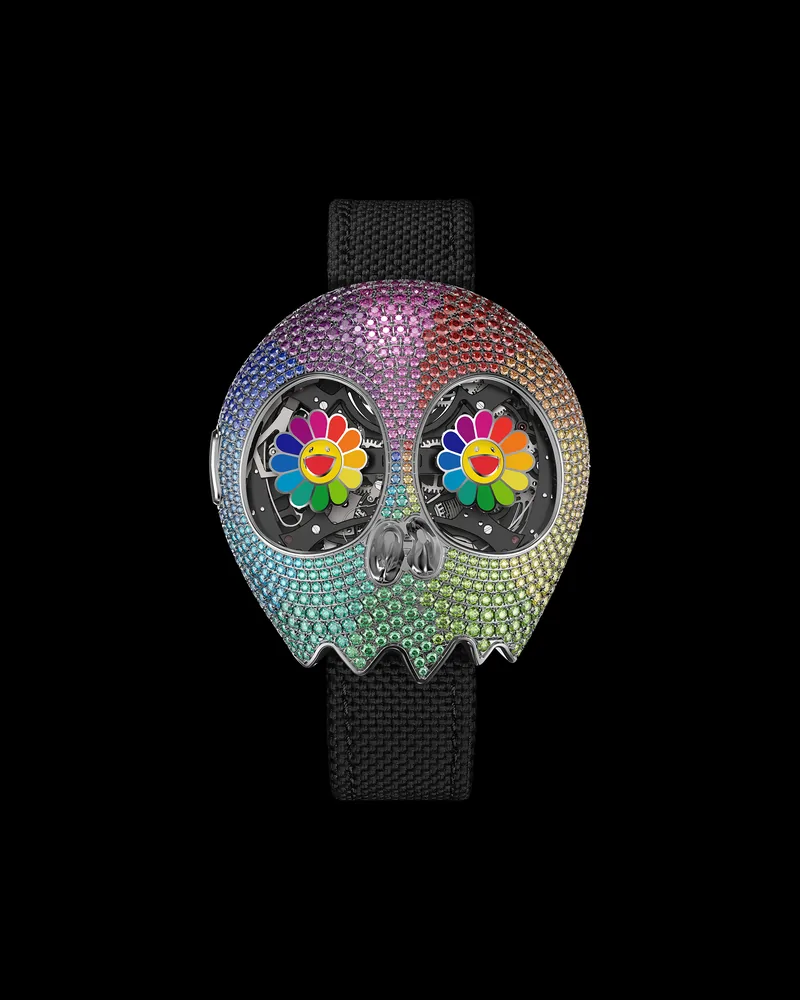
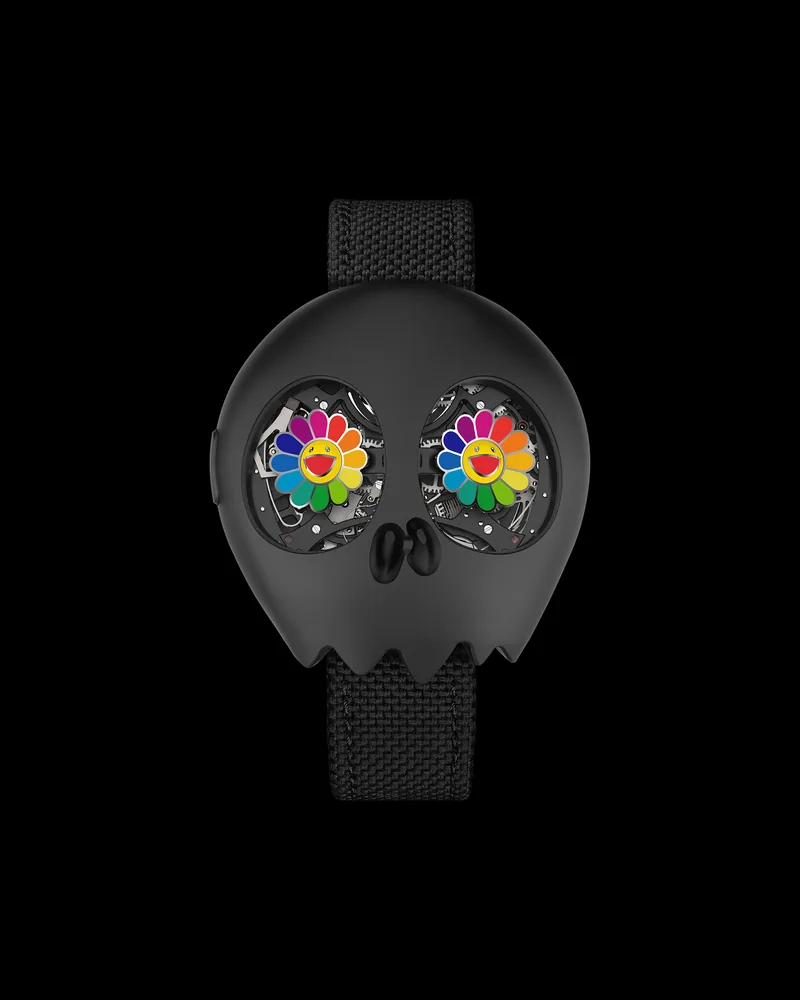
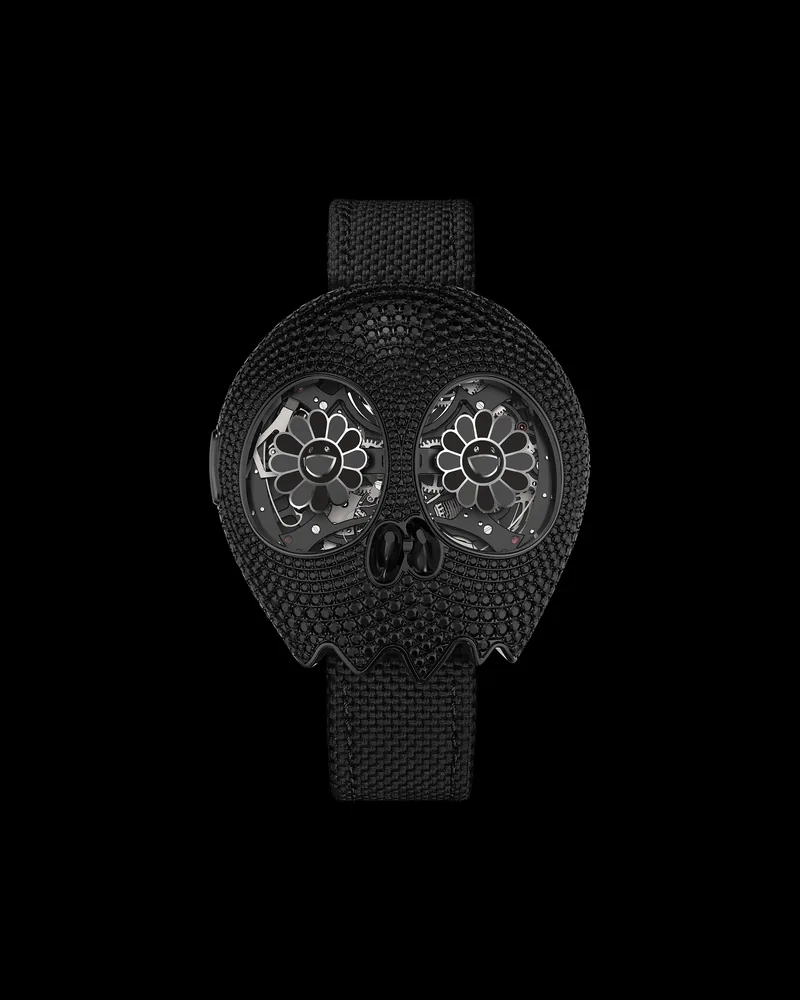
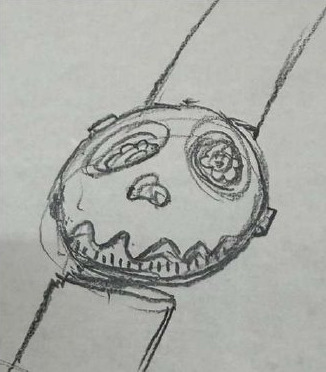
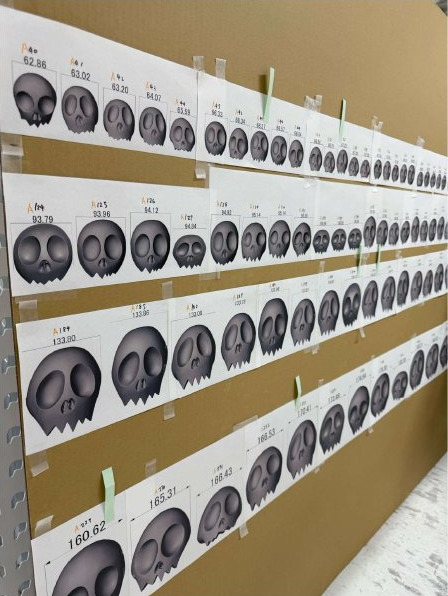
Finding the right form for SKULL became an artistic process. Murakami explored more than 600 different skull shapes before defining the sculptural architecture of the first Time Object. Rather than applying a familiar motif to a conventional watch case, the skull becomes the case itself, transforming the entire object into a three-dimensional expression of Murakami’s universe. Within the skull’s eye sockets, Murakami’s iconic flowers bloom. Thanks to a ball-bearing system, the petals rotate with the movement of the wearer’s hand, creating a dynamic display that evokes a sense of joy and playfulness.
Murakami’s iconic flowers and skulls reflect the inseparable dualities of human existence, celebrating life while acknowledging mortality. Their coexistence reflects the dualities at the heart of philosophy, The Chronos Paradox, where joy and impermanence, beauty and transience, eternity and the passing moment exist simultaneously.
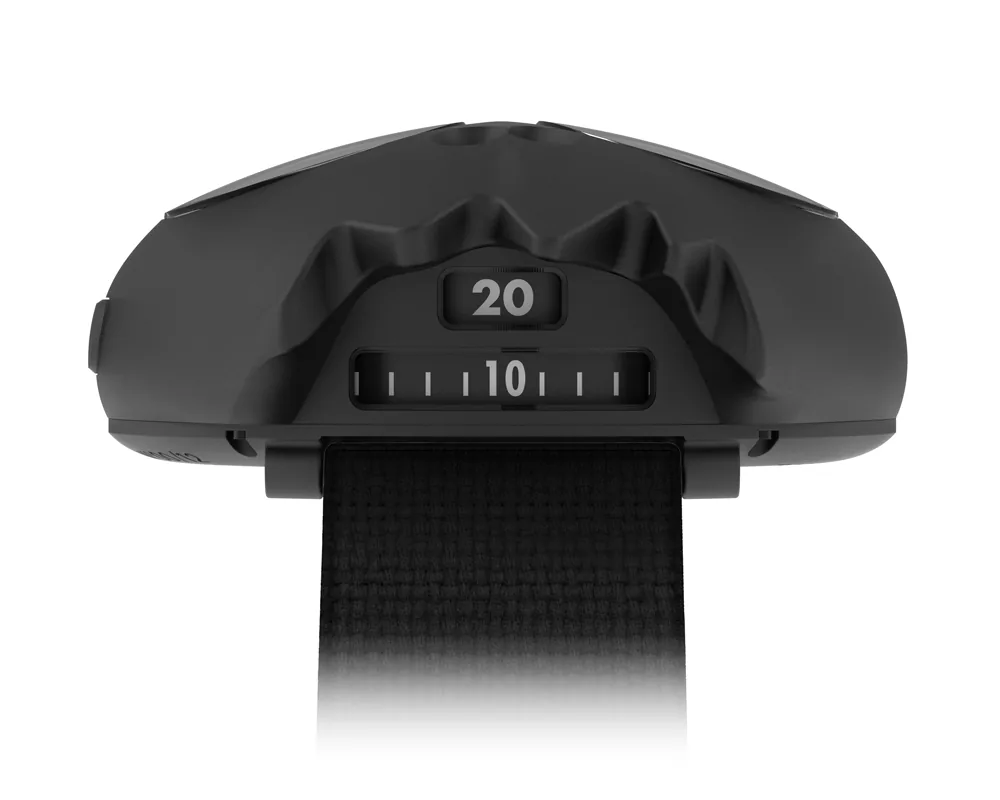
Murakami’s questioning of time extends to the way it is read, and his vision led to the invention of the world’s first cylindrical jumping-hour display. This Time Object has no crown, no conventional dial and no hands. Instead, the hours and minutes appear through a lateral aperture positioned at 6 o’clock. To read the time, the wearer simply tilts the watch outward. The 24 hour is displayed on a rotating cylinder, jumping instantaneously as each new hour begins, while the minutes advance continuously on a trailing disc.